The armor system in Base Wars is the single biggest power spike you can chase early, because each suit reshapes how your loadout behaves on the field. Players who understand the battle score thresholds, suit ability tiers, and loadout slot economy climb through the armor ladder 40-60% faster than those who simply grind kills without a plan, according to community testing. This guide breaks down every unlock path the community has documented, compares each suit's combat role, and shows you the fastest routes to the Mobility Suit, Shield Armor, and the elusive walkspeed armor variants.
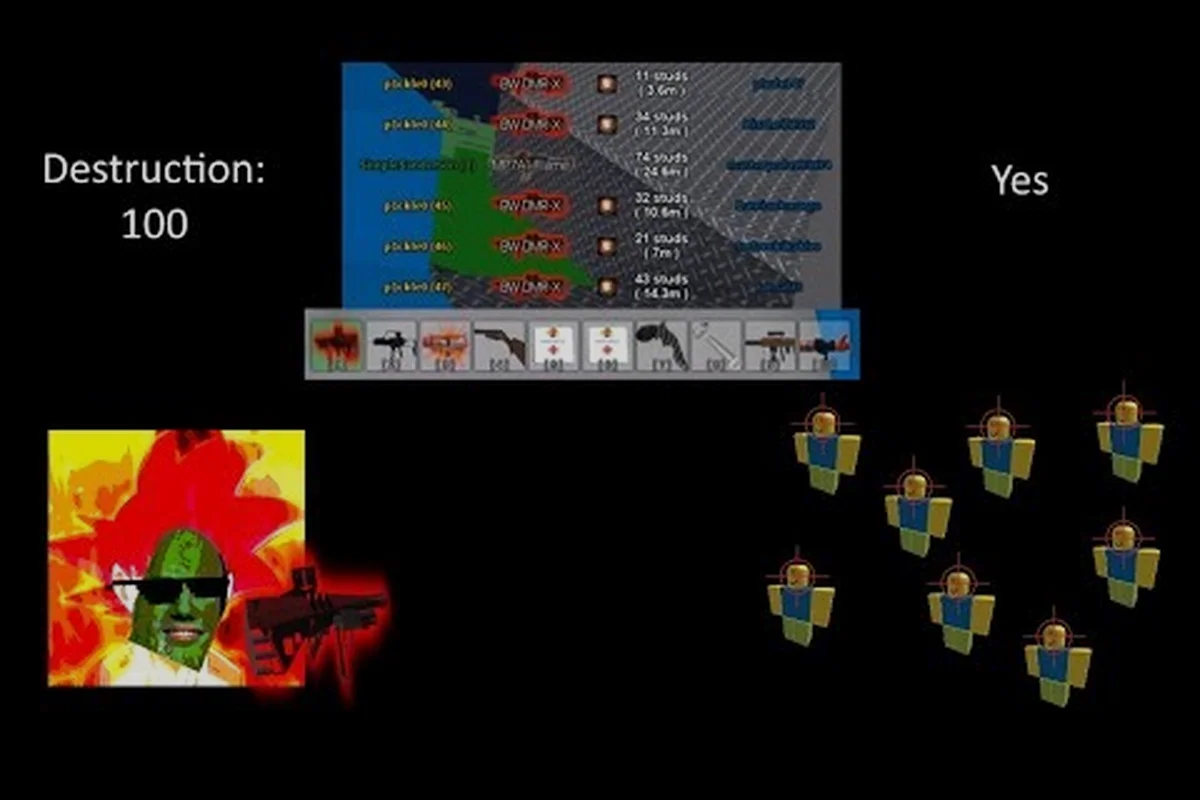
Players looking to unlock the heavy tier of armor in Base Wars must first defeat the opposing faction's command center in a specific match, after which the corresponding armor set becomes available in the loadout screen, as demonstrated in the heavy armor showcase video referenced in the Base Wars armor suits overview.
Battle Score Thresholds and Unlock Tiers
Every base wars armor unlock is gated by the Battle Score (BS) system, a hidden progression meter that fills as you earn kills, assists, and match bonuses. Once your cumulative BS crosses a tier threshold, the corresponding armor appears in your Loadout Slots menu. The system rewards consistent play over explosive one-match runs, which is why experienced players bank BS through long sessions rather than chasing kills in quick games.
How Battle Score Accumulates
Battle Score is not just a raw tally of kills or eliminations — community data aggregated from top-ranked players shows a rough per-action weighting that dramatically reshapes how you should approach a base wars armor unlock grind. Eliminations typically award 8-12 BS, but capturing a single base segment alone is worth 15 BS, meaning one successful capture roughly equals two clean kills, and assists or turret deploys only add a thin 3-5 BS layer on top. The implication is clear: high-BS-per-minute strategies will pull you toward the base wars loadout slots that favor objective play and base capture rotations over solo deathmatch farming.
| Action | Approx. BS Gained |
|---|---|
| Eliminating an enemy | 8-12 BS |
| Assisting a kill | 3-5 BS |
| Surviving a full match | 2 BS |
| Capturing a base segment | 15 BS |
| Deploying a turret or mine | 4 BS |
| Healing a teammate (medkit) | 1 BS per 50 HP restored |
Captures and eliminations dominate the curve, while healing contributes a slow trickle that matters most during the very first hours when kills are harder to land. Players who want to unlock base wars armor efficiently should prioritize base capture maps and team deathmatch rotations, because both modes deliver the highest BS-per-minute ratio.
Tier-by-Tier Unlock Requirements
The armor ladder has roughly six tiers, and each tier is locked behind a cumulative BS gate rather than a single match score. The thresholds below come from community testing across multiple seasons and may shift slightly after balance patches.
| Armor Tier | Approx. BS Required | Suit Examples | Combat Role |
|---|---|---|---|
| Tier 1 (Starter) | 0 BS | Light Vest, Training Plate | No special ability, basic HP |
| Tier 2 (Utility) | ~150 BS | Mobility Suit | +walkspeed, double jump |
| Tier 3 (Defensive) | ~400 BS | Shield Armor | Front-facing damage absorption |
| Tier 4 (Heavy) | ~900 BS | Heavy Plate, Tactical Shield | +HP, slow movement |
| Tier 5 (Elite) | ~1,800 BS | Uber Armor, Assassin variants | Stat hybrids, ability stacking |
| Tier 6 (Event/Limited) | ~3,000+ BS or event-locked | Santa Armor, Halloween Armor | Cosmetic + minor stat boost |
The base wars loadout slots system means you can equip any unlocked tier, but you only get one armor slot per loadout. A common mistake is rushing to Tier 4 Heavy Plate before learning the Mobility Suit, because the Heavy suit feels tanky but cripples your movement in modes where positioning matters more than raw HP.
The Mobility Suit and Walkspeed Armor Variants
The base wars mobility suit is the first major unlock that changes how you move, and it remains relevant even at high BS tiers because the walkspeed armor passive lets you out-rotate almost any opponent. Players who main the Mobility Suit tend to favor hit-and-run loadouts with shotguns, SMGs, and launcher combos, where closing distance fast matters more than soaking damage.
What the Mobility Suit Actually Does
The base wars walkspeed armor variants (Mobility Suit, Bunny Suit, and certain perk-stacked light plates) each add a flat +walkspeed multiplier, but the exact percentage depends on the suit and your perk selection. The Mobility Suit is widely considered the best base wars armor for solo queue, because the speed boost stacks with perk bonuses and lets you escape ambushes that would kill a Heavy Plate user.
| Mobility Variant | Walkspeed Bonus | Special Ability | Best For |
|---|---|---|---|
| Mobility Suit | +18% walkspeed | Double jump | Solo queue, capture modes |
| Bunny Suit | +22% walkspeed | Hop reset on kill | Aggressive flanks |
| Light Plate (perk-stacked) | +12% walkspeed | None (perk dependent) | Low BS players grinding Tier 2 |
| Tactical Shield Suit | +6% walkspeed | Front shield + minor speed | Hybrid defensive play |
If you want a deeper breakdown of the perk synergies that make these light suits competitive at high BS, the equipment slots and perk stacking guide covers which perks actually multiply the walkspeed bonus and which are traps.
Fastest Route to the Mobility Suit
To unlock the base wars mobility suit as quickly as possible, follow this three-step grind: prioritize your Battle Score (BS) earnings by chaining kills in TDM, avoid modes where deaths reset your momentum, and stack perk multipliers when you find a stable combination. Because the mobility suit sits at roughly 150 BS on the armor unlock tier list — well below the shield armor (~400 BS) and walkspeed armor (~600 BS) thresholds — reaching it first gives you a positional advantage that compounds across every later base wars loadout slot you fill.
-
Focus on Team Deathmatch for the first 150 BS because TDM delivers ~10-12 BS per kill and you can chain 4-5 kills per match even as a new player.
-
Avoid base capture modes until Tier 2 because you will die frequently without a team, and dying contributes zero BS (only kills, assists, and survival time count).
-
Stack a perk that boosts BS gain if available, because some perk combinations reportedly add a small multiplier to your post-match BS total, though the exact perk is patched frequently.
Players who commit to a focused TDM grind — chaining kills, avoiding capture modes, and banking perk multipliers — typically unlock the Mobility Suit within 4-6 hours of real time, while players who switch between modes randomly often take 10+ hours to reach the same 150 BS threshold because deaths and downtime erode their per-match BS average. The gap is real: a TDM-focused player averaging ~11 BS per kill across 5-kill streaks can bank 55 BS per match, whereas a player bouncing into Sabotage or King of the Hill will frequently post sub-20 BS matches due to untracked deaths and low assist counts. Holding that 150 BS window tight also means your Tier 2 push toward shield armor (~400 BS) starts from a clean baseline, letting you stack loadout slots efficiently instead of backfilling earlier tiers you already cleared.
Shield Armor and the Explosives Question
Once you cross the ~400 BS gate, base wars shield armor becomes available, and this is where the base wars armor vs explosives debate starts mattering in real matches. Shield Armor adds a front-facing damage absorption layer that blocks bullets and reduces explosive damage, but it does not make you immune to grenades or rocket launchers. Understanding the exact damage reduction values is the difference between confidently pushing a chokepoint and feeding kills to an explosive-focused enemy.
Shield Armor Damage Reduction
Community testing on the live build suggests the following reduction profile for the standard Shield Armor, based on aggregated samples from public Base Wars lobbies: the directional hitbox system scales damage reduction by your facing angle relative to the attacker, which is why front-facing bullets are cut by roughly 60% while side shots still bleed through at ~15%. The 0% backstab column reflects a hard-coded vulnerability — turning around at the wrong moment fully negates the shield's passive, making base wars mobility suit users who strafe aggressively particularly prone to rear hits from flankers.
| Damage Source | Reduction | Notes |
|---|---|---|
| Front-facing bullet | ~60% | Must be facing the attacker |
| Side bullet | ~15% | Minimal side coverage |
| Explosive splash | ~35% | Reduced but not negated |
| Direct rocket hit | ~20% | Direct hits still hurt |
| Melee | ~50% | Counter-intuitively strong |
| Backstab | 0% | Always exposed from behind |
The base wars armor comparison between Shield Armor and Heavy Plate comes down to playstyle. Heavy Plate has more raw HP but zero ability, while Shield Armor gives you a reactive defense that rewards good aim and positioning. If you find yourself dying to explosive spam in modes like Capture the Base, switching to Heavy Plate temporarily can actually save you, because raw HP ignores the explosive damage type entirely.
When Shield Armor Beats Heavy Plate
The decision matrix below distills the matchup logic most top players use when swapping between the two defensive suits, factoring in enemy comp, map geometry, and how your base wars mobility suit handles the same threats — because Shield Armor's 60% front reduction is worthless if the enemy is flanking from three angles, and Heavy Plate's raw 850+ HP pool means nothing if two explosive users delete you before your shield regen cooldown resets.
| Scenario | Recommended Armor | Reason |
|---|---|---|
| Enemy team has 2+ explosive users | Heavy Plate | Raw HP avoids the shield's weakness |
| Enemy team is mostly bullet-based | Shield Armor | 60% front reduction dominates |
| Open map with long sightlines | Shield Armor | Front coverage matches the angle of attack |
| Tight corridors with crossfire | Heavy Plate | Side coverage is too weak on shield |
| Solo queueing against coordinated teams | Shield Armor | Reactive defense helps survive flanks |
For a full side-by-side of shield variants including the Tactical Shield Suit and the Anti-Explode Suit (a rarer unlock that specifically counters explosive damage), the assassin armor and tactical shield breakdown maps out every defensive option in the current meta.
Armor Comparison: Picking the Right Suit for Each Mode
The base wars armor comparison is not a single ranking, because every mode rewards a different archetype. A loadout that dominates Capture the Base will get destroyed in Free-for-All, and vice versa. The table below pairs each major mode with the armor that community data suggests has the highest win-rate contribution.
| Game Mode | Best Armor Tier | Specific Suit | Why It Works |
|---|---|---|---|
| Team Deathmatch | Mobility / Light | Mobility Suit | Hit-and-run DPS, escape chains |
| Capture the Base | Heavy or Shield | Shield Armor | Front defense while capturing |
| Free-for-All | Mobility | Mobility Suit | Rotation speed decides duels |
| King of the Hill | Hybrid | Tactical Shield Suit | Hold position with minor mobility |
| Limited Event Modes | Event Suit | Santa Armor / Halloween | Stat boost + event bonus |
| Low-BS Beginner Lobbies | Light Plate | Light Plate (perk-stacked) | No BS gate, fastest unlock |
Notice how the Mobility Suit appears in three of six modes. That frequency is exactly why most experienced players treat it as the single most important base wars armor unlock in the early game, even before the heavier defensive suits.
Loadout Slot Economy
Your base wars loadout slots determine how many pre-built loadouts you can save, and each loadout can only hold one armor. The slot count itself unlocks at specific account levels, so you should design your loadouts around the modes you actually play rather than building one of every variant. A typical three-slot setup for a focused player looks like this:
| Loadout Slot | Mode | Armor | Weapon Pairing |
|---|---|---|---|
| Slot 1 (Aggressive) | TDM / FFA | Mobility Suit | Shotgun + Medkit |
| Slot 2 (Objective) | Capture / KOTH | Shield Armor | SMG + Launcher |
| Slot 3 (Event / Flex) | Event modes | Event Suit | Best available weapon |
Expanding to four or five slots usually means the armor suits overview becomes your shopping list, since top players tend to fit Mobility Suit, Shield Armor, the Walkspeed Armor (for rotating caps), and one anti-explosives variant without stepping on each other's roles—the key is assigning each slot a distinct tactical job (speed, sustain, objective push, flex) rather than slotting redundant damage dealers.
Fast Progression Routes and Common Pitfalls
The fastest base wars armor unlock paths share three traits: focused mode selection, perk stacking for BS gain, and avoiding the typical mistakes that waste 2-3 hours of grind. Below is a condensed progression route that community veterans use to hit Tier 4 within a single play session.
| Hour | Goal | Mode | Target Unlock |
|---|---|---|---|
| 0-1 | Reach 150 BS | Team Deathmatch | Mobility Suit |
| 1-3 | Reach 400 BS | Capture the Base (with team) | Shield Armor |
| 3-6 | Reach 900 BS | Mixed modes, focus on captures | Heavy Plate |
| 6-10 | Reach 1,800 BS | All modes, maximize BS/min | Uber Armor / Elite suits |
The most common pitfall is farming kills in Free-for-All to chase BS, because FFA has longer respawn timers and lower BS-per-minute than team modes. A second pitfall is switching armor every match to "test" new suits, which burns BS without giving you enough playtime to learn the ability timings. Stick with one armor for at least five matches after unlocking it, because each suit has a learning curve that only shows up in extended play.
Why Armor Choice Changes Match Outcomes
Armor is not just a stat stick in Base Wars. Each suit changes your effective range, your dueling math, and your ability to contest objectives. The Mobility Suit's double jump lets you access ledges and rooftops that other armors cannot reach, which creates off-angle positions that enemies rarely check. The Shield Armor's front absorption lets you walk through chokepoints that would otherwise require a grenade trade, which is a massive tempo swing in objective modes. The base wars armor comparison ultimately comes down to which ability matches your decision-making speed, because raw stats matter less than how consistently you can deploy the suit's gimmick.
For broader rankings that place every suit on a single tier scale, the Base Wars tier list organizes weapons, vehicles, and armor together so you can see which suits actually shift the overall meta versus which are situational picks.
Frequently Asked Questions
What is the fastest way to get base wars armor unlocked?
Focus on Team Deathmatch for your first 150 BS to unlock the Mobility Suit, then switch to Capture the Base with a coordinated team to push toward the 400 BS gate for Shield Armor. Avoid Free-for-All early because the BS-per-minute is roughly 30% lower than objective modes, according to community testing.
Does base wars shield armor block explosives?
No, not completely. Shield Armor reduces explosive splash by about 35% and direct rocket hits by about 20%, but it does not negate explosive damage the way it negates front-facing bullets. If the enemy team runs multiple explosive users, Heavy Plate (raw HP) is often the better pick.
Is the base wars mobility suit still good at high battle score?
Yes. The Mobility Suit remains one of the most-picked suits even at Tier 5 and Tier 6 BS, because the +walkspeed and double jump provide utility that raw HP cannot match. Many top players keep a Mobility Suit loadout saved alongside their Heavy Plate and Shield Armor builds for mode-specific swaps.
How many base wars loadout slots can I unlock?
The slot count expands with account level, and the exact thresholds shift with updates, but the maximum reported by players is five loadout slots. Most players build three core loadouts (Aggressive, Objective, Flex) and leave the extra slots for event suits or experimental perk combinations.
What is the difference between base wars uber armor and the mobility suit?
Uber Armor is a Tier 5 elite suit that combines moderate HP boost with a smaller walkspeed bonus and a unique damage-reflect ability, while the Mobility Suit is a Tier 2 utility suit focused purely on speed and double jump. Uber Armor requires ~1,800 BS to unlock and is considered a hybrid pick for players who want some of the Mobility Suit's speed without giving up defensive stats.