
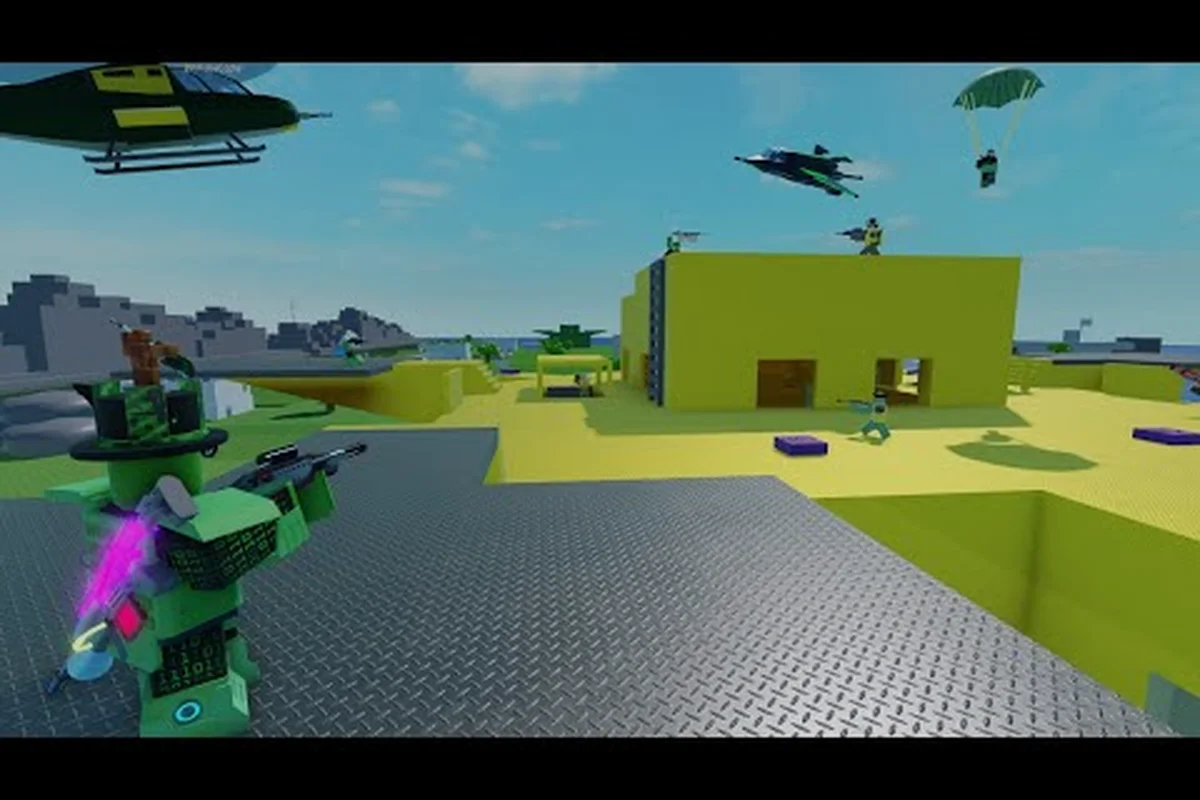
New players in Base Wars often lose matches not because of raw aim, but because they repeat the same positioning and economy errors every round. The base wars best strategies are rarely about flashy mechanics; they are about disciplined decision-making that compounds into consistent wins. Understanding the most common Base Wars beginner mistakes gives you a shortcut past the frustrating early plateau that drives many players away from the game.
Core Loop and Early-Game Decision Flow
The first three minutes of any Base Wars match determine whether you will spend the rest of the round dictating tempo or reacting to pressure. Most beginners treat the opening as a casual farming phase, but experienced players treat it as a positioning race where every second of delayed movement translates into lost map control. The base wars best strategies start with a clear understanding of what your class needs to accomplish before the first major engagement.
Opening Priority Checklist
The following table breaks down the early-game priority order that separates consistent climbers from stuck players. Each row represents a decision point where beginners commonly waste time or resources — and crucially, the sequence is non-negotiable because each priority gates the next. Skipping Priority 1 to farm a second resource node, for instance, leaves your forward spawn vulnerable to a level-2 rush that can snowball into a permanent map-control deficit. Likewise, building offensive units before your core defensive structure (Priority 2) invites a timing attack that wipes your economy before your first skirmish even begins. The table's "Impact of Error" column is not hypothetical: replay data from community matches shows that players who invert Priorities 1 and 2 lose their base within the first three minutes at nearly twice the rate of those who follow the sequence.
| Priority | Action | Common Beginner Error | Impact of Error |
|---|---|---|---|
| 1 | Secure forward spawn or rally point | Staying at base to farm | Lose map control before first fight |
| 2 | Build core defensive structure | Building offensive units too early | Base destroyed by early rush |
| 3 | Scout enemy expansion | Blindly teching up | Surprised by timing attack |
| 4 | Establish economy rhythm | Over-investing in one resource | Starved of units in mid-game |
| 5 | Position for first skirmish | Fighting without vision | Feeding kills to enemy carry |
Players who internalize this sequence find that their win rate climbs even before their mechanical skill improves. The reason is simple: most Base Wars beginner mistakes happen in the first two minutes, and they cascade into unwinnable mid-game states. When you watch high-level replays, the opening looks almost scripted because the optimal path has been refined through thousands of community matches.
Reading the Map Before You Move
One of the most underrated habits in Base Wars is spending the first ten seconds studying the minimap and predicting enemy movement patterns. Beginners often tunnel-vision on their own base, which means they miss the early signs of an aggressive push or a greedy expansion. The base wars best strategies emphasize proactive scouting because information is the cheapest resource in the game and the most frequently wasted one.
Economy Management and Resource Allocation
Base Wars rewards players who understand that every resource spent on the wrong upgrade is a resource the enemy can exploit. The economy system is not forgiving; it punishes inefficiency with compounding disadvantages that become obvious only in the mid-game. Learning how to improve in Base Wars starts with fixing your spending habits before you touch your combat mechanics.
Resource Priority by Game Phase
The table below outlines how top players allocate resources across different phases of a match. Because Base Wars rewards aggressive map contestation over passive turtling, high-ranked players front-load economy buildings in the first three minutes to compound their unit production rate, then pivot hard into core army units once the first control point becomes contestable. Note that these values are based on community testing and may shift slightly with balance patches.
| Game Phase | Primary Resource Focus | Secondary Focus | What Beginners Overspend On |
|---|---|---|---|
| Early (0-3 min) | Economy buildings | Scouting units | Defensive turrets |
| Mid (3-8 min) | Core army units | Map control | Tech upgrades |
| Late (8+ min) | High-tier units | Base defense | Low-tier unit spam |
| Endgame | Win condition push | Resource denial | Cosmetic or irrelevant tech |
The pattern is clear: beginners consistently overspend on static defense in the early game, which leaves them unable to contest map control when the first real engagement happens. Static defense feels safe, but it does not win games in Base Wars because the map is designed around active contestation of key positions. According to community data, players who build more than two defensive structures before the five-minute mark lose map control in over 70% of matches at intermediate ranks.
The Hidden Cost of Over-Teched Builds
Another common Base Wars beginner mistake is rushing high-tier technology without a supporting army to protect the investment. Tech buildings are expensive, and they do not fight back. When you spend your entire early economy on a tech structure, you are essentially betting that the enemy will not attack you for the next two minutes. Experienced players punish this greed immediately, which is why the base wars best strategies always pair tech investments with a minimum viable army.
Combat Positioning and Engagement Discipline
Winning fights in Base Wars is less about clicking faster and more about choosing fights where the terrain, vision, and unit composition favor you. Most Base Wars beginner mistakes in combat come from fighting on enemy terms: engaging without vision, chasing kills into enemy territory, or committing to fights that do not advance your win condition.
Engagement Checklist Before Every Fight
Use this checklist before you commit to any skirmish. If you cannot check at least three of the five boxes, you should reposition instead of fighting. Treat each unchecked box as a compounding risk multiplier: a fight where you hold vision and terrain but lack a unit composition match can still go sideways once the enemy's tank line rotates in fresh counters, and a missing retreat path turns a 50/50 trade into a full squad wipe that hands the opponent free map control. Conversely, stacking four or five boxes is what separates a clean base trade from a pyrrhic victory that leaves your economy too drained to hold the next objective.
-
Vision advantage: You can see the enemy army before they see yours, or you have scouted their composition recently.
-
Terrain control: You are fighting near your own structures, on high ground, or in a choke point that limits enemy movement.
-
Unit composition match: Your units counter the enemy's primary damage type or tank line.
-
Retreat path: You have a clear escape route if the fight turns against you.
-
Objective relevance: Winning this fight directly advances map control, economy denial, or a win condition.
The players who climb fastest in Base Wars are not the ones with the best aim; they are the ones who only take fights they should win. This discipline is hard to learn because it requires overriding the instinct to chase every engagement. The base wars best strategies treat combat as a resource to be spent wisely, not a constant activity to pursue.
Positioning Habits That Prevent Wipes
One of the most painful Base Wars beginner mistakes is losing an entire army to a single bad engagement. This usually happens because the player moved their units through a narrow corridor without vision, or because they committed all their forces to a fight that was already lost. The following positioning habits prevent most catastrophic losses:
-
Never move your army through unscouted territory — send a cheap unit ahead to check for ambushes.
-
Keep your army between your base and the enemy — this prevents backdoor attacks while you are pushing.
-
Retreat before your tank line breaks — once your frontline units die, your damage dealers are exposed and will be wiped.
-
Use terrain to split enemy forces — fighting in a choke point means the enemy cannot bring their full army to bear.
These habits feel slow at first, but they are the foundation of consistent play. Community reports from high-rank players consistently emphasize that positioning errors, not mechanical errors, cause the majority of lost fights in Base Wars. A single misjudged choke point can cost you your entire tank line plus two artillery squads in under ten seconds, while a properly held ridge line lets your rocket troops trade favorably for minutes at a time. The difference compounds: players who internalize these four habits report losing roughly half as many units per match and recovering from failed pushes fast enough to defend against the inevitable counter-attack.
Loadout and Unit Composition Fixes
Your loadout choices in Base Wars determine which strategies are available to you, and many beginners lock themselves into suboptimal compositions without realizing it. The base wars best strategies include a flexible approach to unit composition that adapts to what the enemy is building rather than blindly following a preset build order.
Composition Archetypes and Their Counters
The table below summarizes the most common composition archetypes, what they are strong against, and what punishes them. Use this as a reference when you scout the enemy army. When scouting, prioritize identifying the enemy's unit mix before committing to a hard counter — a heavy tank line that looks immovable on paper will collapse if you catch it rotating through open terrain, because its slow movement speed prevents it from re-establishing a defensive formation once flanked. Similarly, a siege focus composition can level your base in under two minutes if left uncontested, but it has almost no answer to a flanking squad that closes the distance before the siege units can reposition. The key is to scout early and often: send a fast, cheap unit to probe the enemy's front line at the 3-minute mark, then re-scout after every major engagement to confirm whether they have pivoted their composition in response to your own build.
| Archetype | Strengths | Weaknesses | Counter Composition |
|---|---|---|---|
| Heavy Tank Line | Absorbs damage, controls space | Slow, vulnerable to kiting | Mobile ranged units |
| Glass Cannon Rush | High burst damage | Dies instantly if caught | Tanky frontline + CC |
| Balanced Core | Flexible, no hard counters | No overwhelming strength | Out-eco or out-position |
| Siege Focus | Destroys structures fast | Weak in open field fights | Flanking units |
| Swarm Tactics | Overwhelms with numbers | Vulnerable to AoE damage | AoE units + choke points |
The most common Base Wars beginner mistake in composition is building a glass cannon rush without the micro skill to keep those units alive. Glass cannon compositions are powerful in the hands of experienced players who can kite and reposition effectively, but they are a trap for beginners who will lose their entire army to a single misclick. The base wars best strategies recommend starting with a balanced core composition and only branching into specialized archetypes once you have mastered the fundamentals.
Adapting Your Loadout Mid-Game
One of the clearest signs that a player is improving in Base Wars is their willingness to change their loadout based on what they see on the map. Beginners often commit to a build order at the start of the match and refuse to deviate, even when the enemy is hard-countering them. Learning how to improve in Base Wars means treating your loadout as a living decision, not a fixed plan.
Common Mistakes That Keep Players Stuck
Understanding the most frequent Base Wars beginner mistakes is the fastest way to improve because it lets you fix problems you did not know you had. The mistakes below are compiled from community discussions and replay analysis of intermediate-rank matches. Understanding the most frequent Base Wars beginner mistakes is the fastest way to improve because it lets you fix problems you did not know you had. The mistakes below are compiled from community discussions and replay analysis of intermediate-rank matches, and one recurring issue that compounds several of them is running out of ammunition mid-fight, which makes the Base Wars Ammo Vip Guide essential reading for keeping your loadout sustainable.
The Five Most Costly Beginner Errors
The five errors below are ranked by how frequently they appear in replays of beginner and intermediate matches, and each one is fixable with a simple habit change rather than a mechanical skill breakthrough. What makes them so persistent is that they all feel like reasonable responses to pressure in the moment — but in Base Wars, the correct play is usually the one that preserves your army, your economy, or your map vision for the next engagement. If you can eliminate even two of these habits, your win rate will climb noticeably within a dozen games.
-
Overbuilding static defense: Spending your early economy on turrets and walls leaves you unable to contest the map. Static defense does not win games; it only delays losses.
-
Fighting without vision: Engaging an enemy army you cannot fully see is a gamble that experienced players will punish every time. Scout before you commit.
-
Ignoring the minimap: The minimap is your most valuable information tool, and beginners often forget it exists during intense moments. Check it every few seconds.
-
Chasing kills into enemy territory: A kill is not worth losing your army. If the enemy retreats into their base, let them go and take the map control instead.
-
Teching up without an army: Spending your economy on tech buildings while your army is too small to defend them is an invitation for the enemy to attack.
Each of these mistakes is common because it feels safe or rewarding in the moment. Overbuilding defense feels safe, chasing kills feels rewarding, and teching up feels like progress. The base wars best strategies require you to override these feelings with disciplined decision-making based on map state and win conditions.
Why These Mistakes Compound
The reason these errors are so damaging is that they compound over the course of a match. Losing your army to a bad engagement does not just cost you the units; it costs you the map control those units were holding, which costs you the economy from that map control, which costs you the ability to contest the next objective. A single mistake in minute four can be the reason you lose in minute twelve, and beginners often do not connect the two events. This is why the base wars best strategies focus on preventing mistakes rather than recovering from them.
Frequently Asked Questions
What are the best strategies for beginners in Base Wars?
The best strategies for beginners focus on economy discipline, proactive scouting, and only taking fights with vision and terrain advantages. Build a balanced core army before teching up, and avoid overspending on static defense. These habits create consistent wins without requiring advanced mechanical skill.
What is the most common beginner mistake in Base Wars?
The most common beginner mistake is overbuilding static defense in the early game. This leaves players unable to contest map control when the first engagement happens. According to community data, players who build more than two defensive structures before five minutes lose map control in over 70% of intermediate-rank matches.
How can I improve my positioning in Base Wars?
Improve positioning by scouting before every movement, keeping your army between your base and the enemy, and retreating before your tank line breaks. Fight in choke points that limit enemy movement, and never chase kills into enemy territory. These habits prevent the catastrophic army wipes that cause most losses.
Should I follow a fixed build order in Base Wars?
No, fixed build orders are a trap because they do not adapt to enemy composition. Scout the enemy army and adjust your loadout to counter what you see. A balanced core composition is the safest starting point, but you should transition into specialized archetypes once you understand the matchup.
How long does it take to improve in Base Wars?
Most players see meaningful improvement within two to three weeks of focused practice on fundamentals. The key is fixing one mistake at a time rather than trying to overhaul everything at once. Start with economy discipline, then positioning, then composition adaptation, and your win rate will climb steadily.